
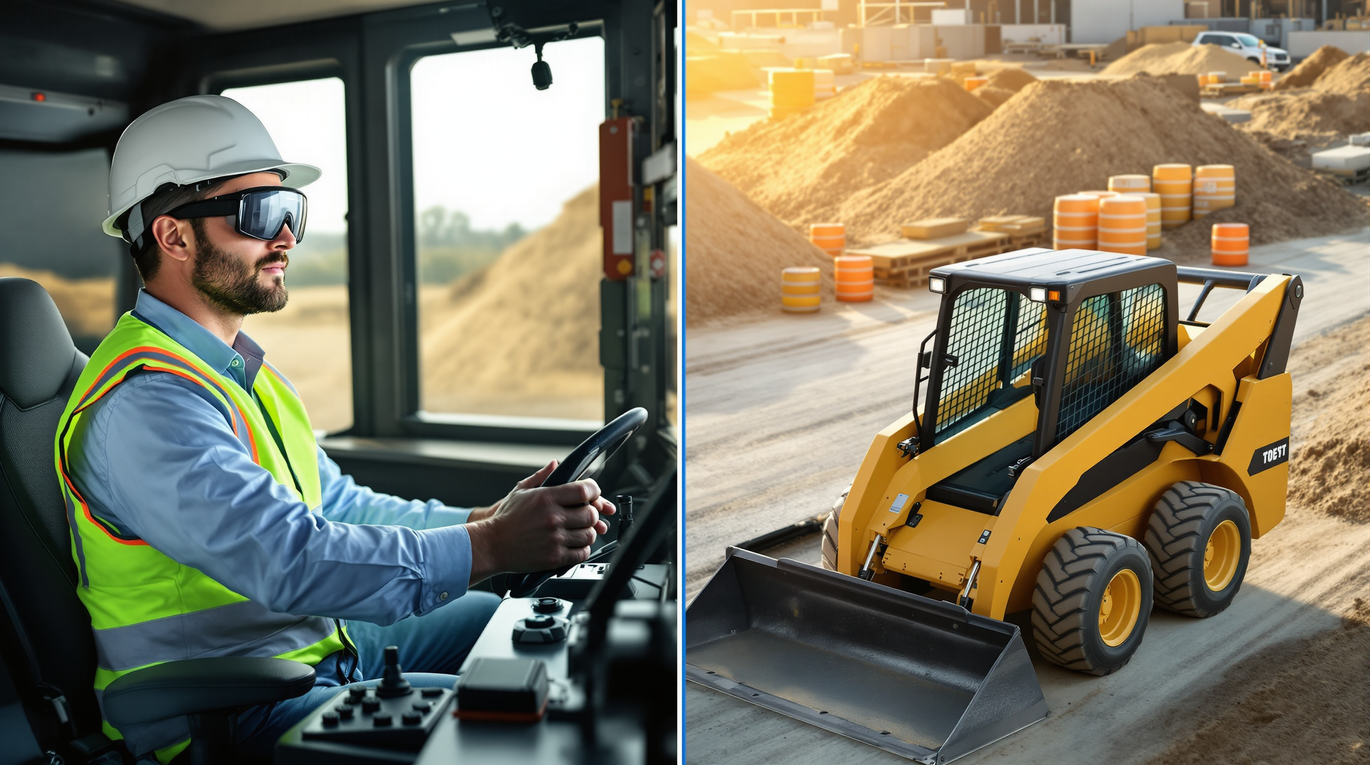
AR training has changed the way operators learn to handle heavy equipment. It makes complex skills easier to master without ground risks. Recent studies show that operators who use simulation-based training improve their performance in the field by a lot and boost their productivity.
AR training's controlled environment lets operators practice their skills anytime, anywhere. This flexibility paired with advanced AR training simulator software guides better involvement and helps operators remember critical procedures better.
This piece shows how AR training reshapes the scene of skid loader operation safety. We get into ground implementation success stories and break down specific features that make this technology work for operator training.
Understanding AR Training for Skid Loaders
AR training merges digital content with the real environment and lets skid loader operators learn through interactive, hands-on experiences. The technology places virtual instructions and 3D models on actual equipment to create a training environment that combines practical experience with safety.
AR training uses specialized display and tracking technologies to merge digital content into the real workspace. The system combines multiple tracking methods. It uses fiducial markers to identify components precisely and laser sensors to monitor equipment movement. Operators can practice loading, navigate terrain, and handle emergency procedures in real working conditions while getting immediate feedback on their performance.
Modern AR training simulators have key features that make them work well for skid loader operation. These systems include:
- Immediate performance tracking that measures operator accuracy and efficiency
- Interactive 3D visualizations of equipment components and controls
- Customizable training scenarios for various skill levels
- Quick feedback on safety violations and operational errors
These simulators use authentic engineering-grade machine behavior that accurately copies equipment stability and operator controls. Training modules help build skills through well-laid-out exercises. Operators start with simple controls familiarization and move up to complex operations like stockpiling and truck loading.
The system tracks detailed metrics about operator performance, including task completion times and safety compliance data. This informed approach helps trainers spot areas that need improvement and adjust training programs. Operators can develop proper techniques before they handle actual equipment.
The Safety Impact: Breaking Down the Numbers
AR training has made skid loader operations much safer according to recent data. Companies that used AR for training saw fewer skid-steer accidents between 2015-2020. Construction companies reported 67.1% fewer incidents caused by human error.
Accident reduction statistics
AR training has made operations safer in many ways. Companies that switched to AR-based skid loader training saw zero lost time from injuries. They also had 32% fewer near-miss incidents.
Operators seem happier with this new approach too. Training centers using AR simulators found that operators were 30% more satisfied and did better on safety tests 70% of the time. This success comes from letting operators practice in safe virtual environments.
Common operator errors eliminated
We focused on fixing the most dangerous mistakes that often lead to serious injuries or deaths. Our complete analysis shows AR training helped reduce these critical errors:
- Crushing incidents between bucket and frame (these made up 78% of fatalities)
- Rollovers from poor load handling and terrain navigation
- Accidents when safety devices weren't working or were bypassed
- Injuries from wrong entry/exit methods
The numbers show AR training works best at stopping maintenance-related accidents, which used to be the deadliest. Operators can now practice dangerous scenarios safely in virtual environments. This helps them remember safety rules and emergency steps better.
Real Training Scenarios in AR
AR training simulators now provide complete skid loader operation scenarios that reflect real-life challenges. Operators start their practice in controlled virtual environments to build fundamental skills without any risk.
Loading and unloading practice
The AR training system shows operators the right loading techniques. They begin with simple bucket control exercises. Trainees then move on to complex tasks such as stockpiling materials and truck loading operations. The simulation monitors exact movements and ensures operators keep proper load heights and angles throughout the exercise.
Terrain navigation exercises
AR training programs feature ground conditions and obstacles that operators face regularly. Operators receive instant feedback when they approach terrain challenges incorrectly. These exercises teach trainees to:
- Keep appropriate speeds on different surfaces
- Guide the machine safely on slopes and uneven terrain
- Position the skid loader correctly for various tasks
- Work with proper weight distribution in different conditions
Emergency situation handling
The AR training platform creates realistic emergency scenarios that would be dangerous to practice in actual conditions. Equipment malfunctions, hazardous material spills, and other critical situations that need quick decisions are simulated by the system. Operators must show proper emergency response procedures and maintain situational awareness during these exercises.
The training modules use advanced tracking technology to monitor operator's responses and movement patterns. Instructors can identify areas that need more practice, which allows for customized training adjustments. Operators develop muscle memory and confidence to handle emergency situations safely through repeated practice in these controlled scenarios.
Implementation Success Stories
Organizations have successfully used augmented reality training solutions that showed remarkable improvements in operator performance and safety. Their experiences gave great insights about how this technology affects ground operations.
Construction company case study
DHL's AR training for warehouse operations produced exceptional results. The company achieved a 25% increase in performance during the picking process after introducing AR-based picking process training. Their AR training program replaced traditional paper pick lists and handheld scanners. Warehouse employees could view overlaid information through wearable AR glasses that included:
- Product location details within the warehouse
- Quantity requirements for each product
- Detailed stock information for each aisle
DHL's operators showed improved accuracy and efficiency in their daily tasks without disrupting existing workflows.
Training center results
Bosch achieved compelling outcomes by implementing AR training in automotive workshops using Microsoft HoloLens 2 glasses. The company combined AR training activities for workshop technicians to focus on complex repair processes and new employee training.
Their AR system guided technicians through 3D diagrams and on-screen text. This helped them interact with digital objects while performing ground tasks. Bosch reported a 15% reduction in technical errors and significant improvements in task completion times.
Training centers that use AR simulators have documented broader positive outcomes beyond these specific cases. Operators show higher proficiency levels consistently. Performance data indicates better decision-making capabilities in complex scenarios. Repeated practice in risk-free environments helps develop muscle memory and confidence when handling emergency situations.
Conclusion
AR training changes how operators learn to handle skid loaders safely. Operators can practice critical skills in risk-free environments with detailed performance tracking before they touch real equipment. Companies like DHL and Bosch show impressive results - accident rates dropped up to 67.1% and performance went up by 25%.
The numbers speak for themselves. Operators who train with AR score 70% higher on safety tests and handle emergencies with more confidence. They get this edge from realistic simulations that cover simple controls and complex emergency scenarios.
AR training tackles the most dangerous mistakes that used to cause serious injuries. Operators develop the right techniques through constant tracking and feedback. This ended up creating a safer workplace for everyone.
Traditional training methods still matter, but AR technology gives unmatched benefits for developing skills and improving safety. Companies looking to boost their operator training programs will find AR solutions both practical and effective to create skilled, safety-minded equipment operators.


